

For students stepping into the world of analytics, knowing the right qualifications isn’t a bonus—it’s essential. Whether you’re dreaming of a role doing dashboards, crunching numbers, or engineering data pipelines, your qualifications pave the path. In 2025, companies expect more than just enthusiasm; they look for skills, tools, and evidence you can deliver. This blog will help you understand the qualifications you must meet, what tools to learn, how courses/trainings play a role, and what salary you can expect once you’re job-ready.
Why Qualifications Matter
- Qualifications tell employers you have met certain minimum skills—so you aren’t filtered out in early rounds.
- They reduce the gap between what you know vs. what work demands. Good training and prerequisites mean you hit the ground running.
- Seeing real stats builds confidence: freshers with the right tools & training tend to land better roles.
The Key Qualifications Students Need
Here are critical qualifications every aspiring data analyst should aim for:
| Qualification | Why It’s Important | How to Acquire It |
|---|---|---|
| Formal Education / Degree | A bachelor's in computer science, statistics, mathematics, economics or related fields is frequently desired in job descriptions. It shows you’ve had structured training in foundational subjects like probability, linear algebra, etc. | University degree or recognized diploma; or a credible DA course in Chandigarh or anywhere else if degree is not specialized. |
| Data Analyst Prerequisites | Skills such as basic computation, logical reasoning, familiarity with spreadsheets, understanding averages & probability. Without these, learning tools & analytics becomes very slow. | Self-study, MOOCs, short courses; practice with Excel / Google Sheets. |
| Tool Proficiency | Using the right data analytics tools (SQL, Python / R, visualization tools like Power BI or Tableau) is often required in real roles. Employers test tool skills. | Enroll in tool-specific modules; build small projects using these tools. |
| Hands-On Projects & Portfolio | A portfolio demonstrates your ability to work end-to-end—data cleaning, analysis, and visualization. It’s what separates the theory from practice. | Build mini-projects, GitHub repos; internships; course projects. |
| Training & Placement Support | Institutes that offer data analyst training help you with interview prep, mockups, connections to companies. It accelerates job readiness. | Join programs with good placement records, local training institutes; check student reviews. |
| Soft Skills & Communication | Technical skills are necessary, but not sufficient. Analysts must explain insights to non-technical stakeholders; good communication saves misunderstandings. | Practice writing reports, giving presentations; work in groups; get feedback. |
Tools You Should Master
To meet modern data analyst qualifications, mastery of certain tools is expected. Here are key data analytics tools:
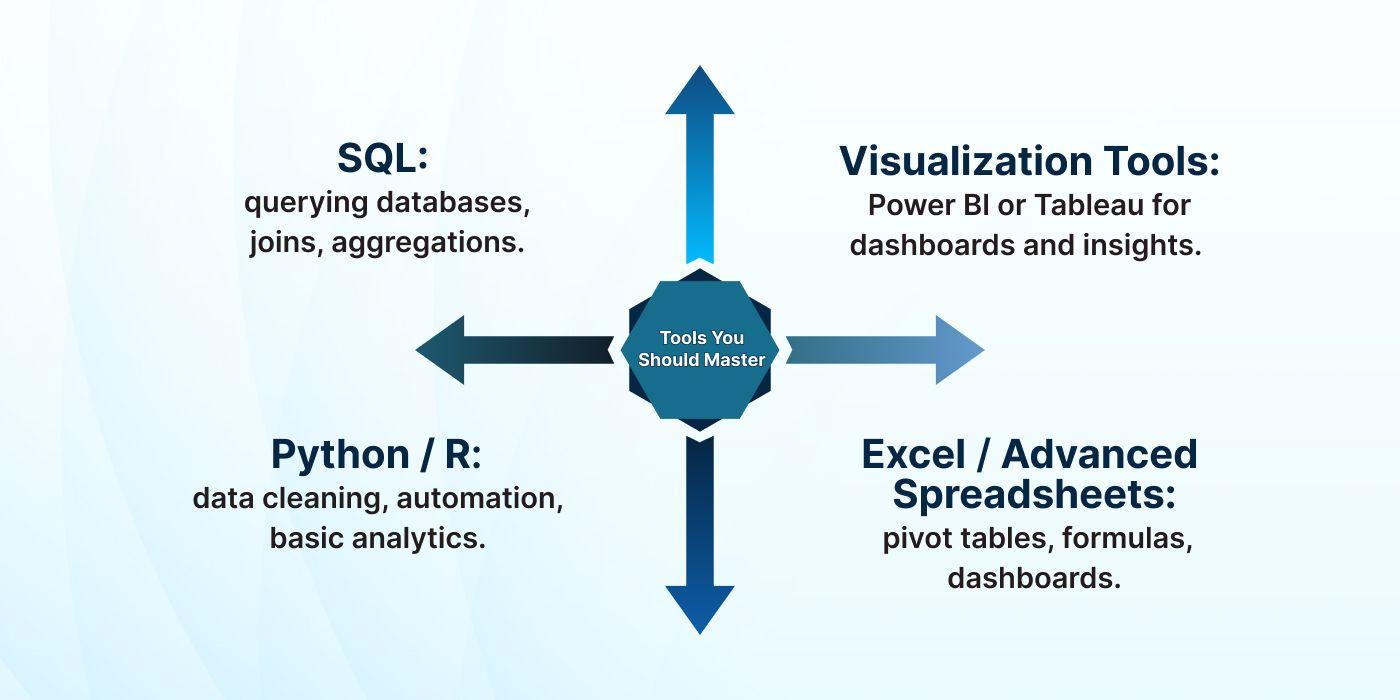
Using these tools in real projects helps you show proof of your qualification, not just certificate.
Student Stories
Neha from Chandigarh
Neha had a commerce degree but lacked confidence in analytics. She took a data analytics course in Chandigarh that emphasized tool practice (SQL + Python + Tableau) and strong prerequisites (math, logic). After building a small project analyzing retail customer data, she got offers around ₹5.2 LPA.
Aman, engineering background
Aman was doing engineering but interested in data. He enrolled in a 6-month training course in Chandigarh with placement support. He learned fundamentals + advanced tools + interview prep. Within 8 months, he landed a job as junior data analyst with ₹6.5 LPA.
Salaries & What You Can Expect
Statistics show:
- The average salary of a data analyst fresher in India is ~ ₹4-6 LPA.
- With 2-3 years’ experience, this can go up to ₹7-9 LPA.
- In metro cities (Delhi, Bangalore, Mumbai), salary tends to be higher due to cost and demand.
So meeting the qualifications means not just getting any job, but getting a decent role with good pay.
How Courses & Trainings Help
- Look for data analytics courses in Chandigarh or other cities with placement support. They often include live projects, mentorship, and interview prep.
- Industrial training certificate programs add credibility—companies recognize them.
- Good training programs structure learning: basics → tools → specialization → interview readiness.
Comparing Qualification Paths
Here’s a difference sheet comparing two common paths:
| Path | What you do | Time & Cost Estimate | Pros | Cons |
|---|---|---|---|---|
| Full Degree + Self-Learning | Bachelor’s → pick up tools on your own, build portfolio | 3-4 years + ongoing projects and courses | Strong foundational understanding; degree prestige; broad knowledge | Time-consuming; may lack applied experience early on |
| Short-Term Course + Placement Program | Enroll in 6-12 month data analyst training and placement program; focus on tools + project work | ~ 6 months; cost varies by city and institute | Faster entry into job market; practical skills; good for career switchers or freshers without data in degree | Might miss some theoretical depth; may not carry degree weight in certain companies |
Qualifications Related to Becoming a Data Engineer
While your goal is a data analyst role, knowing how to become a data engineer helps, since many qualifications overlap. Data engineers often need to work with ETL pipelines, cloud platforms (AWS, Azure), big data tools like Hadoop or Spark. So, courses that include modules about data engineering give you additional leverage. Even if you stay in analyst role, dual exposure makes you more valuable.
Conclusion
For students who want to become data analysts, qualifications matter. It’s not just about learning tools, but about satisfying prerequisites, choosing training that builds practical experience, and forming a portfolio. Mastering tools like SQL, Python, visualization platforms, combined with strong communication and soft skills, can significantly lift your opening salary and career prospects.
Whether you enroll in a degree, a short-term data analytics course in Chandigarh, or a training & placement program, ensure it aligns with the qualifications listed above. Start early, build steadily, and you’ll soon be in a role where organizations rely on your insights.
Click here to meet the right data analyst qualifications, master in-demand tools, and step confidently into your first analytics role. Start your journey with IDEA today!