

Imagine this: Raj, a final-year student, has just completed his data engineer course. He has learned a lot about databases, cloud computing, and ETL (Extract, Transform, Load) processes, but there’s one thing missing—a solid portfolio.
Raj's main worry is how to showcase his skills to future employers. He’s done the coursework, but how can he prove to companies that he’s ready for a job in data engineering?
If you're like Raj and you're wondering how to build a data engineering portfolio that gets you noticed, this blog is for you. We'll guide you through the key project ideas and resources you can use to build a portfolio that will make you stand out in interviews and job applications.
Why a Data Engineering Portfolio Matters
Your portfolio is your opportunity to show real-world applications of the skills you've learned. It's like your online resume, but better because it demonstrates your capabilities through hands-on work. Companies aren’t just looking for certificates—they want to see your problem-solving abilities and how you’ve applied your knowledge.
Let’s say Raj is applying for a job at a tech company. While his data engineer course gave him the skills, what will truly make him stand out is showcasing his experience through projects that demonstrate his ability to handle data pipelines, work with databases, and integrate various technologies.
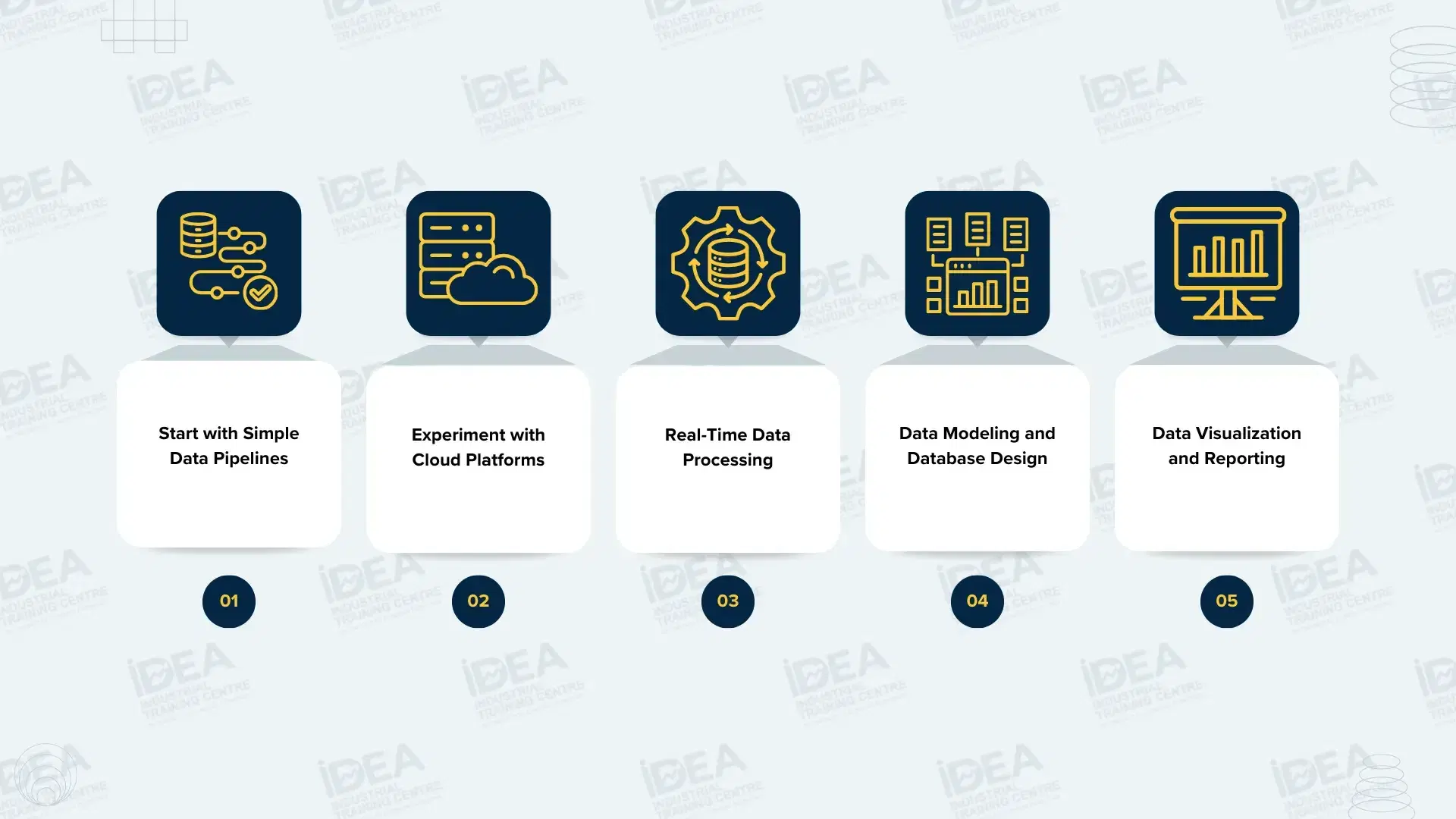
1. Start with Simple Data Pipelines
One of the first projects Raj decided to work on was building a simple data pipeline. A data pipeline is a series of processes that automatically move and transform data from one place to another, and it's a core part of any data engineer's job.
Project Idea: ETL Pipeline
- What to do: Build a pipeline that takes data from a source (such as an API or CSV file), transforms it (cleaning or altering data), and loads it into a database or data warehouse.
- Tools to use: SQL, Python, Apache Airflow, or AWS for cloud deployment.
This project will showcase your ability to work with data sources, clean data, and automate data workflows. Start by creating simple pipelines and, over time, build more complex ones that can handle larger datasets and integrate with cloud platforms like AWS or Google Cloud.
2. Experiment with Cloud Platforms
Cloud platforms are the backbone of modern data engineering. Learning how to work with them is essential for any aspiring data engineer. Raj decided to experiment with AWS (Amazon Web Services) to get a feel for the cloud environment.
Project Idea: Building a Data Warehouse on AWS
- What to do: Set up a simple data warehouse on AWS (using services like Redshift or S3) and integrate it with data from different sources.
- Tools to use: AWS, Python, SQL.
This project will not only show your ability to use cloud platforms but also your understanding of data warehousing, which is crucial for storing and analyzing large datasets.
3. Real-Time Data Processing
Companies need real-time data to make decisions quickly. One of the most sought-after skills in data engineering is the ability to work with real-time data streams.
Project Idea: Real-Time Data Streaming with Kafka
- What to do: Build a real-time data processing system that collects, processes, and displays data as it arrives (e.g., stock prices or social media feeds).
- Tools to use: Apache Kafka, Python, Spark.
This will showcase your ability to work with real-time data and handle streaming pipelines, which are in high demand. It's an advanced project, but it's a great addition to your portfolio once you get the hang of the basics.
4. Data Modeling and Database Design
Database management is a huge part of a data engineer's job. A good data engineer knows how to design efficient databases that store data in an organized and accessible way.
Project Idea: Designing a Database Schema
- What to do: Create a well-designed relational database schema for a real-world use case, like an online store or a customer management system.
- Tools to use: MySQL, PostgreSQL, or any other relational database management system (RDBMS).
This project demonstrates your ability to design and manage data in a way that makes it easy to query and maintain, a key skill for any data engineer.
5. Data Visualization and Reporting
While data analytics is the focus of data engineers, being able to visualize data is still an important skill. Raj worked on using Tableau to visualize the data that was processed by his pipelines.
Project Idea: Data Visualization with Tableau
- What to do: Create a dashboard that visualizes the data from your previous projects. For example, display sales trends, inventory levels, or customer behavior.
- Tools to use: Tableau, Power BI, or Google Data Studio.
This project will highlight your ability to communicate insights visually, a skill that is useful for both data engineers and analysts.
Where to Get Started: IDEA Software Training
To ensure Raj’s projects are built with the latest industry standards, he enrolled in IDEA Software Training. It offered him real-world guidance and hands-on practice with the tools and projects he needed to succeed.
If you’re wondering where to get the right data engineering skills, an organized program like the ones offered by IDEA Institute can help you get the foundational knowledge and hands-on practice to build your portfolio. It's a great way to fast-track your career in data engineering with expert mentorship, guided projects, and industry insights.
Conclusion: Ready to Build Your Portfolio?
Building a strong data engineering portfolio doesn’t have to be overwhelming. Start with small, manageable projects and gradually take on more complex challenges as you grow. By working on real-world projects, using industry-standard tools, and learning resources like IDEA Software Training, you’ll be ready to showcase your skills to potential employers.
Remember, every project you add to your portfolio not only shows your technical expertise but also highlights your problem-solving skills, creativity, and ability to work with modern technologies. So, start today and get one step closer to landing your dream data engineering job.
Ready to build a strong data engineering portfolio? Click here to join IDEA Software Training and start learning the skills that will set you apart in the job market!