

Many students do not stay stuck because they are lazy. They stay stuck because they believe the wrong things.
One friend says data engineering is only for coding experts. Another says you need a computer science degree. Someone else says just learning SQL is enough. Then we open LinkedIn and see job posts asking for ETL, Python, cloud, PySpark, APIs, data warehouses, and pipelines.
Suddenly, the field starts looking bigger than it really is.
This is why many beginners delay their learning. They keep thinking, “Maybe I am not ready yet.”
But most of these fears come from myths.
Good Data engineering training does not expect students to know everything from day one. It helps them start with basics, understand how data moves, and slowly build the confidence to work on real pipeline projects.
So before choosing a path, students need to stop believing these five common myths.
Myth 1: Data Engineering Is Only for Coding Experts
This is one of the biggest fears beginners have.
Many students think they must be expert programmers before starting data engineering. Because of this, they keep postponing their learning. They spend months watching coding tutorials but still do not understand how data engineering works.
The truth is simple. Coding helps, but data engineering is not only about writing code.
It is about understanding data flow.
A beginner should first learn:
- Where data comes from
- How data is stored
- How data is cleaned
- How data moves between systems
- How clean data becomes useful for reports and decisions
Yes, tools like SQL, Python, and PySpark are important. But students do not need to master everything before starting. They can learn step by step.
A good beginner journey starts with simple database concepts, SQL queries, file handling, and small pipeline tasks. Once the foundation becomes clear, advanced tools feel less scary.
Student takeaway: You do not need to be a coding expert to begin. You need the right learning sequence.
Myth 2: A Certificate Alone Can Get You Hired
Certificates are useful. They help students show that they completed training. They also support college submissions, internship records, and resume building.
But a certificate alone cannot answer interview questions.
If an interviewer asks, “What project did you build?” and we only talk about course completion, the answer feels weak.
Companies want to know whether students can apply what they learned. They want to see whether we understand data sources, cleaning steps, transformations, tables, errors, and outputs.
This is why project work matters more than just collecting certificates.
Before choosing any data engineering course in Mohali, students should check whether the course includes practical tasks, not just theory classes.
A strong learning experience should include:
- SQL practice
- ETL examples
- File-based projects
- API understanding
- Pipeline building
- Final project explanation
A certificate becomes valuable only when it represents real work.
Student takeaway: A certificate can support your resume, but projects support your confidence.
Myth 3: Data Engineering Means Learning Too Many Tools at Once
This myth creates the most confusion.
Students see long roadmaps online and feel they need to learn everything together. SQL, Python, Spark, cloud, Airflow, APIs, Snowflake, Databricks, dashboards, Git, and more.
That creates panic.
But real learning does not work like that. Beginners need structure, not pressure.
A smart learning path should move in stages:
- Start with data basics
- Learn SQL and databases
- Understand data warehouse concepts
- Practice simple ETL flows
- Learn Python for data tasks
- Move toward PySpark and larger data processing
- Build small pipelines
- Explain projects clearly
This is where data engineering training in Mohali can help students who want guided learning instead of random tutorials.
The goal is not to learn every tool at once. The goal is to understand how each tool fits into the data journey.
When students learn in the right order, the field becomes manageable.
Student takeaway: You do not need all tools at once. You need a clear roadmap.
Myth 4: Only Computer Science Students Can Learn Data Engineering
Many students from BCA, MCA, B.Tech, B.Sc, commerce, or other backgrounds feel they are behind before they even start.
They think data engineering is only for computer science students.
This is not true.
A technical background may help, but it is not the only requirement. What matters more is consistency, logical thinking, practice, and willingness to solve problems.
Data engineering is built through practice. Students improve by writing queries, cleaning files, understanding errors, and building small workflows.
A beginner from any background can start if they are ready to learn the basics properly
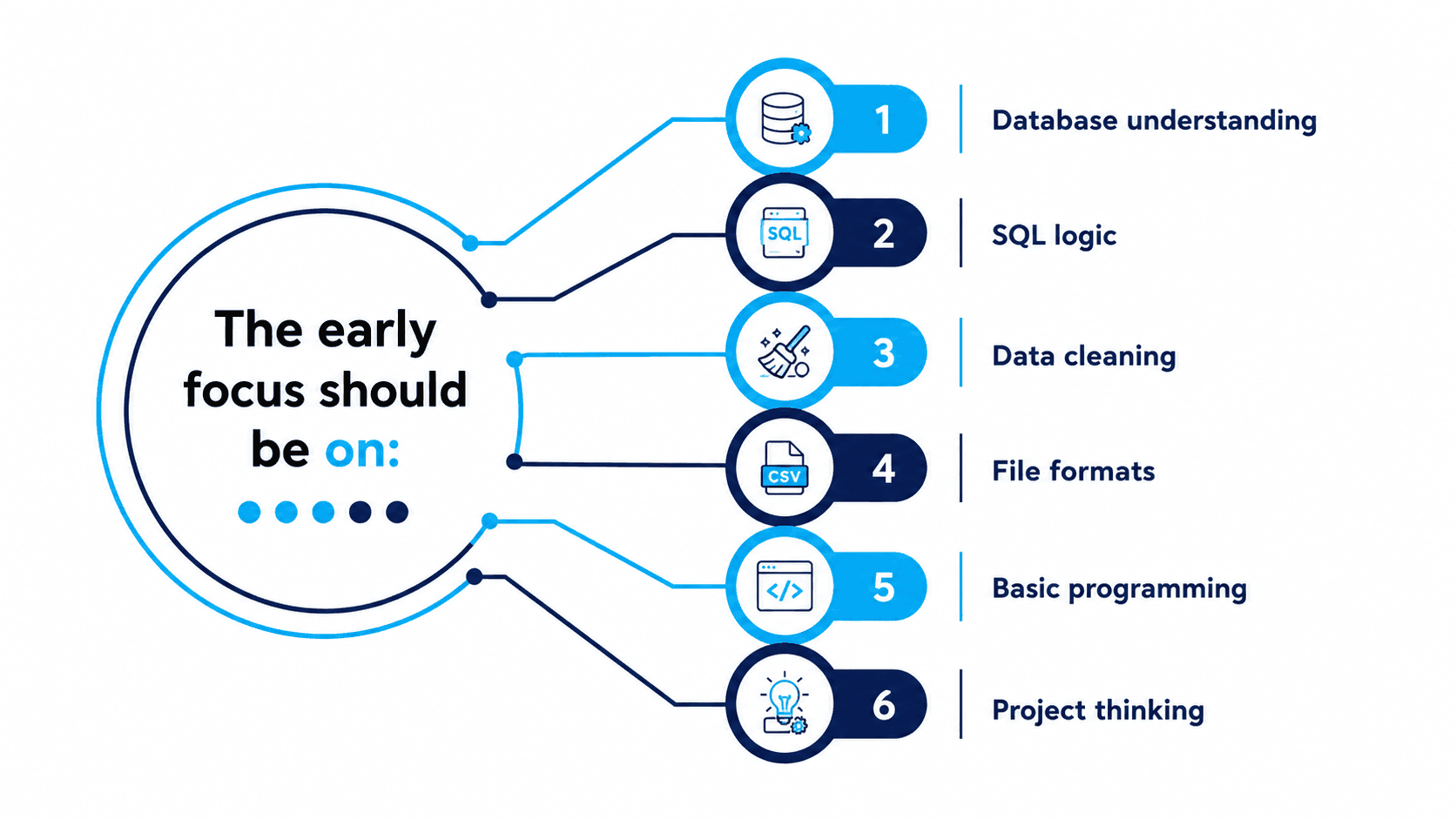
A good data engineering institute should help students build these foundations instead of assuming everyone already knows them.
Student takeaway: Your background does not decide your future. Your practice does.
Myth 5: Watching Free Videos Is Enough to Become Job Ready
Free videos are helpful. They can explain concepts. They can introduce tools. They can help students explore the field.
But free videos alone often create scattered learning.
One video teaches SQL joins. Another explains Python lists. Another talks about cloud. Another shows an ETL diagram. But beginners still struggle to connect everything.
The real problem is not lack of content. The problem is lack of sequence.
Students need practice, feedback, doubt support, project building, and interview explanation. Without these, learning remains incomplete.
A structured data engineering training institute can help students move from confusion to clarity by giving them a proper learning path.
The best training should help students answer these questions:
- What should I learn first?
- How does this topic connect to real work?
- What project should I build?
- How do I explain my project?
- What mistakes should I avoid?
Free content can support learning. But structure turns learning into skill.
Student takeaway: Free videos are useful, but structure makes you consistent.
What Students Should Actually Focus On
Instead of believing myths, students should focus on building real understanding.
Here are the most important areas:
- SQL confidence: Learn how to filter, join, group, and analyze data.
- Database basics: Understand tables, keys, relationships, and storage.
- ETL thinking: Learn how data is extracted, transformed, and loaded.
- Pipeline projects: Build small workflows from source to final output.
- Error handling: Practice fixing messy data and broken logic.
- Project explanation: Learn how to explain what you built in simple words.
These skills are more useful than memorizing random tools.
When students focus on the process, data engineering starts making sense.
How to Know If Training Is Worth Joining
Before joining any course or institute, students should ask practical questions.
A good training option should offer:
- Clear roadmap: You should know what you will learn each month.
- Practical projects: The course should include real pipeline tasks.
- Doubt support: Beginners need regular guidance, not just recorded content.
- Interview preparation: Students should learn how to explain projects.
- Beginner-friendly teaching: Concepts should be explained from the basics.
- Outcome clarity: Students should know what skills they will gain by the end.
If these points are missing, students may complete the course but still feel confused.
Final Thoughts
Most students are not confused because data engineering is impossible.
They are confused because they have heard too many half-truths.
They think they need expert coding. They think certificates are enough. They think they must learn every tool together. They think only computer science students can start. They think free videos can replace structured practice.
But the real path is much simpler.
Start with basics. Practice daily. Build small projects. Understand how data moves. Learn to explain your work clearly.
That is how a beginner slowly becomes confident. And that is how myths stop controlling your career decisions.
Book a consultation call with IDEA Institute to choose the right data engineering learning path.